Friday, October 6, 2023

360TF Trade: Transforming the Fintech Landscape

In an era where financial technology companies are emerging at a rapid pace, 360 TF Trade has managed to stand out as one of the best fintech companies. This remarkable feat has not been achieved overnight; rather, it is the result of innovative thinking, cutting-edge technology, and a commitment to delivering exceptional financial services. This blog will delve into the reasons behind 360 TF Trade's rise to prominence and explore how it has become one of the best fintech companies in the industry.
 
 
Best Fintech Company


One of the key factors that set 360 TF Trade apart from the competition is its advanced technology infrastructure. The company has invested heavily in building a robust and secure platform that can handle a high volume of transactions efficiently. This technology-driven approach allows them to provide fast and reliable services to their customers, whether it's online trading, wealth management, or payment solutions.
 
 
360 TF Trade has diversified its financial services offerings, catering to a wide range of customer needs. From trading in various asset classes, including stocks, forex, and cryptocurrencies, to providing personalized wealth management services, the company offers a comprehensive suite of financial solutions. This diversity allows them to appeal to a broad customer base and adapt to changing market trends.
 
 
Another critical element in 360 TF Trade's success is its customer-centric approach. The company places a high emphasis on understanding and meeting the unique needs of each customer. They provide excellent customer support and maintain transparency in all their dealings. This commitment to customer satisfaction has earned them a loyal and growing customer base.
 
 
360 TF Trade is not content with merely offering existing financial services. They are constantly innovating and looking for new ways to improve their offerings. Whether it's adopting blockchain technology for secure transactions or implementing AI-driven trading algorithms, the company stays at the forefront of technological advancements.
 
 
In a rapidly evolving fintech industry, 360 TF Trade has managed to distinguish itself as one of the best fintech companies in the field. Their commitment to advanced technology, diverse financial services, customer satisfaction, regulatory compliance, innovation, global presence, and strategic partnerships has been the cornerstone of their success. As they continue to adapt and grow, 360 TF Trade is poised to remain a prominent player in the world of fintech, setting new standards for excellence in the industry.

Thursday, September 21, 2023

Check Out the Benefits of International Trade and Finance

International trade and finance are two pillars that drive the global economy. They play a pivotal role in shaping the economic landscape of nations and are essential components of globalization. In this blog, we will explore the numerous benefits of international trade and finance, highlighting how they promote economic growth, stability, and cooperation on a global scale.
 
 
International Trade and Finance


One of the most significant advantages of international trade is its contribution to economic growth. When countries engage in trade with one another, they can access a wider range of goods and services, leading to increased economic activity. This results in higher levels of production, employment, and income, ultimately boosting the overall prosperity of a nation.
 
 
International trade encourages countries to specialize in the production of goods and services in which they have a comparative advantage. This specialization leads to increased efficiency and lower production costs, benefiting both producers and consumers. It fosters innovation and technological advancement, further driving economic growth.
 
 
International trade expands the range of products available to consumers. This means consumers have access to a broader selection of goods at competitive prices. It also promotes healthy competition, encouraging businesses to innovate and improve the quality of their products.
 
 
Finance and trade go hand in hand. Countries engaged in international trade often attract foreign investment. Foreign direct investment (FDI) can stimulate economic growth by bringing in capital, technology, and expertise. This not only benefits the recipient country but also the investing nation.
 
 
International finance allows for risk diversification. Investors can spread their investments across different countries and asset classes, reducing the impact of economic downturns or crises in any one region. This diversification enhances financial stability.
 
 
Global financial markets facilitate currency exchange and hedging mechanisms, which help stabilize exchange rates. This stability is crucial for businesses engaged in international trade, as it reduces uncertainty and risk.
 
 
International trade and finance foster economic interdependence among nations. When countries rely on each other for goods, services, and investments, they are less likely to engage in conflicts. This interdependence promotes peace and cooperation on a global scale.
 
 
International trade and finance are essential drivers of economic growth, stability, and cooperation in our interconnected world. They provide numerous benefits, from expanding consumer choices to reducing poverty and fostering global peace. While they come with challenges and risks, their advantages far outweigh the drawbacks. As the world continues to globalize, these two pillars of the global economy will remain indispensable for the prosperity of nations and the well-being of people worldwide.

Wednesday, September 6, 2023

Demystifying the Types of Letters of Credit: To Secure International Trade

A letter of credit is a financial record that ensures a charge to a dealer from a buyer's bank. It presents a secure manner to facilitate international change and mitigate the hazard of non-price or default. Various types of letters of credit cater to special desires and conditions.
 
 
Types of Letter of Credit


One type is a revocable letter of credit score, which may be canceled or changed through the purchaser or the issuing financial institution without the vendor's consent. This type of letter of credit is not typically used, as it incorporates an excessive stage of threat for the seller.
 
 
Another kind is an irrevocable letter of credit score, which cannot be changed or canceled without the consent of the client, the seller, and the issuing bank. This kind gives extra security for the seller, as it ensures that a fee may be made so long as the phrases and conditions of the letter of credit are met.
 
 
A confirmed letter of credit score is a form of an irrevocable letter of credit that includes the participation of a confirming bank. The confirming financial institution provides its guarantee to the letter of credit score, imparting an extra layer of warranty for the seller.
 
 
There are also standby letters of credit, which serve as a backup approach to payment in case the client fails to fulfill their monetary responsibilities. Standby letters of credit are regularly used in construction projects, where they serve as a form of overall performance bond.
 
 
In addition, import and export letters of credit are unique sorts that facilitate global change. Import letters of credit are issued with the aid of the client's financial institution to guarantee payment to the vendor, whilst export letters of credit are issued through the vendor's bank to make certain charges from the consumer.
 
 
Each sort of letter of credit has its particular necessities and conditions, and each shopper and seller wants to understand the phrases and duties concerned. By utilizing the right kind of letter of credit score, events can conduct international change with confidence and reduce the chance of charge issues.
 
 
Expertise in the specific types of letters of credit is crucial for each person involved in global trade. This financial equipment offers protection and assurance to both shoppers and sellers, allowing the smooth flow of goods and offerings across borders.

Thursday, August 24, 2023

Navigating the Seas of International Trade and Finance

In today's interconnected world, international trade and finance play pivotal roles in shaping global economies. The dynamics of cross-border transactions, investments, and monetary policies can have far-reaching impacts. Let's delve into the crucial factors that drive these domains and underline their importance on the global stage.
 
 
International Trade and Finance

 
International trade relies heavily on trade agreements and tariffs. These agreements establish the terms of trade between nations, promoting exports and imports while reducing barriers. The reduction of tariffs can stimulate economic growth by increasing market access and competitiveness.
 
 
Exchange rates determine the value of one currency relative to another, affecting the cost of goods and services in international markets. Fluctuations in exchange rates can impact export competitiveness and the profitability of businesses engaged in cross-border trade.
 
 
Modern trade is intricately tied to global supply chains. Components of products often cross numerous borders before reaching the end consumer. Financial institutions like banks, investment firms, and multinational corporations play a pivotal role in facilitating international transactions. They provide financing, currency exchange, and risk management services that grease the wheels of international trade.
 
 
Political stability and amicable trade relations are crucial for fostering a conducive environment for international trade. Uncertainty or conflicts can disrupt supply chains, discourage investment, and hinder trade.
 
 
A trade deficit occurs when a country imports more than it exports, while a trade surplus occurs when exports exceed imports. These imbalances can impact a nation's currency value, economic growth, and employment rates.
 
 
Organizations like the World Trade Organization (WTO) and the International Monetary Fund (IMF) help regulate and stabilize international trade and finance. They provide a platform for negotiations, dispute resolution, and financial assistance.
 
 
Advances in technology have transformed trade and finance. E-commerce has enabled businesses to reach consumers worldwide, while fintech innovations have expanded access to financial services, especially in undeserved regions.
 
 
Trade and finance are governed by complex regulatory frameworks that ensure fair competition, consumer protection, and financial stability. Harmonizing regulations across borders can reduce friction and facilitate trade.
 
 
International trade and finance are intertwined forces that drive economic growth, innovation, and global prosperity. A delicate balance of policies, agreements, and cooperation between nations is essential to harness the potential of these domains while navigating the challenges they present. As the world continues to evolve, understanding these factors is crucial for nations and businesses seeking to thrive internationally.

Friday, August 18, 2023

Understanding SOFR Rates: The Backbone of Financial Markets

In recent years, the financial landscape has witnessed a significant shift away from traditional benchmark interest rates like LIBOR (London Inter bank Offered Rate) towards alternative reference rates. One such rate gaining prominence is the SOFR (Secured Overnight Financing Rate). This blog will delve into how does SOFR rates work and their importance in the global financial market.
 
 
Secured Overnight Financing Rate


Based on transactions in the repo market, SOFR is determined. The repo market involves parties exchanging Treasury securities for cash, with an agreement to repurchase the securities at a later date. The rate at which these transactions occur forms the basis of SOFR. The calculation involves a volume-weighted median of transaction-level repo data, which reduces the potential for manipulation.
 
 
SOFR addresses the limitations and vulnerabilities that were exposed in LIBOR during the 2008 financial crisis. Being anchored in real transactions and backed by a deep and liquid market, SOFR provides a more accurate representation of market conditions. This is crucial, as benchmark rates play a pivotal role in determining interest rates for a wide range of financial products, from loans and mortgages to derivatives.
 
 
The transition from LIBOR to SOFR is a significant undertaking for the financial industry. As LIBOR was subject to manipulation and faced declining inter bank lending activity, regulators and industry participants recognized the need for a more reliable benchmark. Organizations across the globe are working to adopt SOFR as the preferred benchmark rate, which requires updating contracts and financial instruments that currently reference LIBOR.
 
 
While the secured overnight financing rate offers a more accurate reflection of market conditions, its adoption is not without challenges. The overnight nature of SOFR means it doesn't perfectly mirror longer-term rates. This has prompted discussions about creating term SOFR rates by using derivatives markets to estimate forward-looking rates. Additionally, operational and technological changes are necessary for financial institutions to seamlessly transition to SOFR-based products.
 
 
SOFR rates are a fundamental component of the evolving financial landscape. By grounding the benchmark rate in real transactions, SOFR aims to provide greater transparency, accuracy, and resilience. As the transition from LIBOR to SOFR continues, it's crucial for the financial industry to adapt and ensure a smooth shift to this new benchmark rate. Ultimately, a robust and reliable benchmark rate like SOFR is essential for maintaining the stability and integrity of global financial markets.

Tuesday, August 8, 2023

The Numerous Benefits of Hiring the Best Trade Finance Company

In today's globalized economy, international trade plays a pivotal role in the success of businesses worldwide. However, engaging in cross-border transactions can be complex, especially when it comes to managing finances, mitigating risks, and ensuring timely payments. To streamline these processes and maximize efficiency, many companies turn to specialized trade finance firms. This blog will explore the numerous advantages of hiring the best trade finance company and how it can lead to substantial growth and success for businesses.
 
Best Trade Finance Company


The best trade finance companies are equipped with a team of experts who possess in-depth knowledge of international trade regulations, currency fluctuations, and market trends. By leveraging their expertise, businesses can navigate the intricate world of trade finance with confidence and make well-informed decisions.
 
 
One of the primary challenges for businesses engaged in international trade is accessing working capital to fulfill orders and meet other financial obligations. Trade finance companies offer various financing solutions, such as letters of credit, trade credit insurance, and invoice financing, enabling businesses to access the capital they need without compromising their cash flow.
 
 
With their streamlined processes and global network of financial partners, the best trade finance companies can expedite transactions and ensure prompt payment collections. This efficiency is particularly valuable in mitigating delays and reducing administrative burdens, enabling businesses to focus on their core operations.
 
 
Trade finance companies can optimize cash flow by providing credit facilities based on outstanding receivables and enabling businesses to extend credit terms to their customers. This strategic approach to cash flow management empowers businesses to take advantage of growth opportunities and stay financially agile.
 
 
Partnering with a reputable trade finance company can provide a competitive edge for businesses. Faster transactions, improved risk management, and efficient cash flow processes can position a company as a reliable and trustworthy trade partner, attracting more customers and forging stronger international relationships.
 
 
Hiring the best trade finance company can revolutionize the way businesses conduct international trade. With their expertise, risk management capabilities, and access to working capital, these specialized firms can provide a wide range of benefits that contribute to increased efficiency, profitability, and growth. For businesses seeking to navigate the complexities of global trade successfully, partnering with a reputable trade finance company is undoubtedly a strategic decision worth making.

Wednesday, July 12, 2023

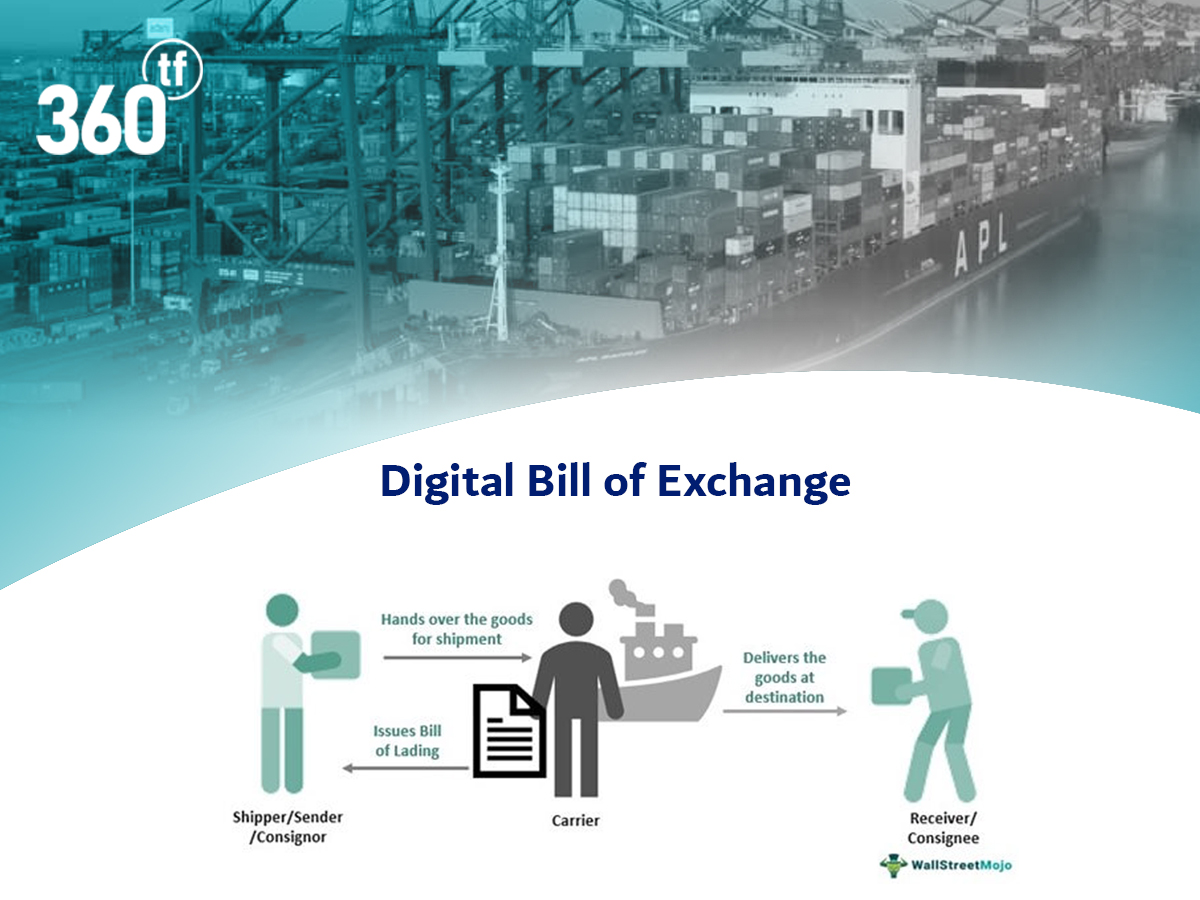
The advantages of embracing the digital bill of exchange

In today's fast-paced world, technological advancements have revolutionized various industries, and the financial sector is no exception. One of the notable developments is the emergence of the digital bill of exchange, which has transformed traditional paper-based transactions into efficient, secure, and convenient digital processes. This blog will explore what a digital bill of exchange is, its benefits, and how it is reshaping the way businesses conduct their financial transactions.


Digital bill of exchange

A bill of exchange is a written, negotiable instrument that serves as a binding agreement between two parties, usually involving payment for goods or services. Historically, paper-based bills of exchange were widely used, but they often faced challenges like physical delivery delays, loss, or fraudulent alterations. To address these issues and streamline the process, the concept of a digital bill of exchange was introduced.


The digital bill of exchange is an electronic version of the traditional paper document, ensuring faster processing, enhanced security, and increased efficiency. It functions as an irrevocable commitment to pay a specific sum to the specified payee within a defined timeframe.


The digital format eliminates the need for physical delivery, reducing the time required for processing and settlement. This efficiency is especially crucial for international trade, where transactions can span across continents and time zones.


Cost Savings: By removing the costs associated with printing, courier services, and storage of physical documents, businesses can significantly reduce operational expenses.


Security and Fraud Prevention: Digital bills of exchange employ advanced encryption techniques, ensuring that sensitive information remains secure. Additionally, digital records create an immutable audit trail, minimizing the risk of fraudulent alterations.


Eco-friendly: Embracing digital bills of exchange contributes to environmental sustainability by reducing paper consumption and its associated ecological impact.


While the digital bill of exchange offers numerous benefits, widespread adoption may encounter some challenges. Resistance to change, concerns about cybersecurity, and the need for a standardized digital framework are among the primary hurdles that need to be addressed.


The advent of the digital bill of exchange marks a significant milestone in the evolution of financial transactions. Its inherent advantages in terms of speed, security, efficiency, and eco-friendliness make it an attractive alternative to traditional paper-based methods. By embracing this digital transformation, businesses can streamline their financial processes, reduce costs, and foster greater trust in their transactions. As technology continues to advance, we can expect the digital bill of exchange to become an integral part of the financial ecosystem, facilitating smoother and more secure global trade.

An Ultimate Guide to Secured Overnight Financing Rate

The financial world is constantly progressing, and one of the current modifications is the transition from LIBOR (London Inter-bank Offered ...